
Imagine that you are browsing an online store and seeing two products sitting side by side. One has 14 reviews, the other has 2,300. You did not read a single word of either listing yet but you already know which one you are leaning toward.
That instinct has a name and it is called the bandwagon effect. And it is one of the most powerful, most consistent and most underused forces in marketing.
However, understanding the bandwagon effect in marketing is not about tricks. It is about understanding how human beings actually make decisions under uncertainty. When people can not decide what they should purchase or make a decision about a product, they look at what everyone else is doing. And when they see evidence of a crowd already moving in one direction, they follow.
This guide breaks down the psychology behind it, why it works so reliably on your website visitors and exactly how to use it ethically to boost website conversions without being manipulative.
What Is the Bandwagon Effect?
Các bandwagon effect is a cognitive bias in marketing and psychology where people adopt beliefs, behaviors or products simply because others are doing the same. The more people join, the more pressure others feel to join too. Popularity becomes self-reinforcing.
The term comes from 19th-century American politics, where circus entertainer Dan Rice used a literal bandwagon and its music to draw crowds to political campaign appearances.
Politicians who climbed aboard the popular wagon gained immediate association with momentum and excitement. People ‘jumped on the bandwagon’ not because of the policies but because of the crowd.
Today, the bandwagon has gone digital. But the underlying psychology has not changed at all.
Three interconnected mechanisms drive the bandwagon effect:
- Heuristics: When faced with uncertainty or too many options, our brains rely on mental shortcuts. One of the most reliable shortcuts is imitation. If 10,000 people bought this product, those people probably knew something. The decision to follow their lead feels safer than evaluating every option independently.
- Social proof: The fundamental idea behind tiếp thị bằng chứng xã hội is that we treat the actions of others as information. If a product has 500 five-star reviews, those reviews are data. Each one signals that someone took the risk before you and did not regret it.
- Conformity bias: Humans have a deep-rooted desire to belong. Standing out from the crowd carries social risk. Following the crowd feels safe, normal and correct. This is not a weakness. It is a survival mechanism that helped our ancestors navigate uncertain social environments for thousands of years.
In Solomon Asch’s landmark conformity experiments, 75% of participants gave at least one obviously wrong answer simply to align with the group. The desire to conform is not a fringe phenomenon; it is the default human response to social uncertainty.
Bandwagon Effect Examples in Everyday Life And Marketing
Before looking at how to use it on your website, it helps to recognize bandwagon effect examples in the world around you. Once you start looking, they are everywhere.
In Everyday Life
- Food and drink: A wine shelf where one bottle is nearly sold out signals popularity. Shoppers reach for it before they have read a single label.
- Fashion: A celebrity wears a particular shoe, the style spreads among their followers and within weeks, it becomes a trend people adopt without consciously deciding to do so.
- Social media: TikTok itself is a bandwagon in motion. More creators join, more viewers join, as it is one of the most popular earning sources for the creators. The platform’s growth is a bandwagon effect at scale.
- Panic buying: During the COVID-19 pandemic, the sight of empty supermarket shelves triggered mass buying of items people did not particularly need, because everyone else appeared to be stocking up.
In Marketing
- ‘Best-selling’ labels: Phrases like ‘Best Seller’, ‘Most Popular’, và ‘2 million sold’ are not just labels. They are explicit bandwagon triggers. They tell the visitor that the crowd has already made a decision.
- Star ratings: A 4.8-star average from 3,400 reviewers communicates crowd approval before a visitor reads a single word of the reviews themselves.
- Influencer marketing: When a trusted creator recommends a product, their audience interprets it as social validation from someone in the crowd they identify with.
- Live purchase notifications: Real-time sales notifications that display ‘Sarah from Manchester just purchased this’ are pure bandwagon mechanics. They show the visitor that other people are buying right now, which makes buying feel like the natural, safe, obvious thing to do.
However, for your website, you can simply trigger these things with NotificationX. Wondering how? We will discuss it later in this blog.
Why the Bandwagon Effect Works So Well on Your Website
Your website visitors arrive in a state of uncertainty. Visitors who are looking for your product suddenly found your website, but they are still not familiar with your brand. They cannot see whether other real people use and trust your brand. In the absence of information, most visitors will hesitate, bounce and go back to Google to find a brand they recognize.
This is why the bandwagon effect in marketing is so powerful on websites, specifically. The uncertainty your visitors feel is exactly the condition under which the bandwagon effect operates most strongly. Give them evidence that other people have already made this decision and you resolve the uncertainty. The hesitation dissolves.
However, the bandwagon effect works hardest at the moment of maximum uncertainty. On your website, that moment usually occurs when:
- A visitor arrives on a product or service page for the first time
- A visitor is on the checkout page, deciding whether to complete the purchase
- A visitor is comparing your offer against a competitor’s
- A visitor is reading your pricing page without having seen any social proof yet
At each of these moments, evidence that others have already made the same decision acts as a powerful conversion accelerator. It is not persuasion. It is information. You are telling the visitor: you are not the first. Other people did this. It was fine. You can too.
How to Use the Bandwagon Effect in Marketing (The Right Way)
Các bandwagon effect is genuinely powerful. It is also genuinely fragile. The moment your social proof feels fabricated, exaggerated or manipulative, the effect inverts. Visitors who feel misled do not just fail to convert. They leave with a negative impression of your brand.
Here is how to apply it correctly, ethically and effectively.
Tactic 1: Display Real-Time Social Proof Notifications
Real-time sales notifications are one of the most direct applications of the bandwagon effect in marketing. When a visitor sees a notification that says ’14 people bought this in the last 24 hours’ hoặc ‘James from London just purchased’, they are getting live evidence of the crowd in motion.
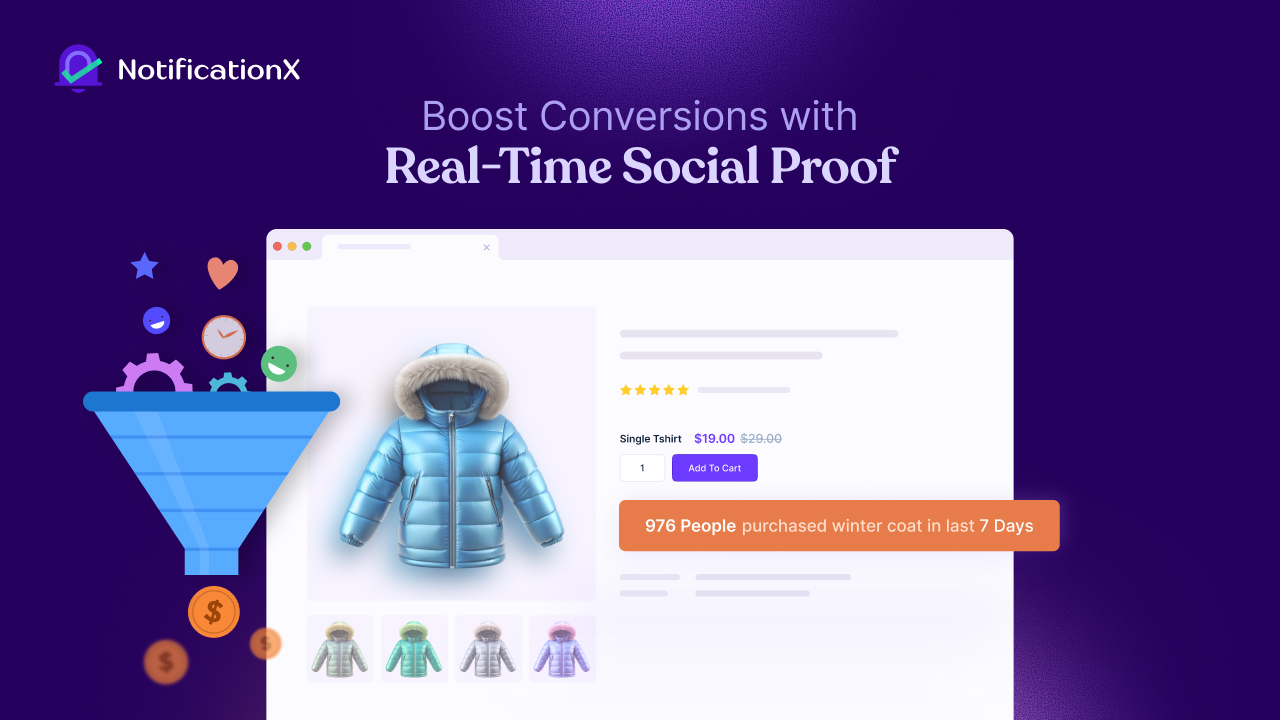
This works because it transforms an abstract product into an active social activity. The visitor is no longer evaluating a static product page. They are watching other people choose this product in real time. The crowd is visible. The bandwagon is moving.
Tactic 2: Show Your Numbers
Raw numbers are one of the simplest and most effective bandwagon effect examples in marketing. ‘40,000 customers served,’ ‘500,000 downloads,’ hoặc ‘Trusted by businesses in 180+ countries’ are not just facts. They are crowd signals. They tell the visitor that a very large group of people has already evaluated this option and chosen it.
The key is specificity. ‘40,000 customers’ is more convincing than ‘thousands of customers’. ‘180 countries’ is more convincing than ‘worldwide’. Specific numbers feel earned. Vague numbers feel invented.
✅ Place your biggest, most specific social proof numbers at the top of your homepage, at the beginning of product pages and directly adjacent to your primary call-to-action buttons. These are the highest-uncertainty moments where bandwagon signals work hardest.
Tactic 3: Make Reviews Impossible to Miss
Social proof marketing lives and dies on the visibility of your reviews. Star ratings, review counts và review excerpts should appear on every product page, on your homepage, on your pricing page, and in your checkout flow. A review buried at the bottom of the page is not doing any conversion work.

Tactic 4: Use FOMO to Amplify Bandwagon Momentum
Tiếp thị FOMO (fear of missing out) is the bandwagon effect‘s natural companion. If the bandwagon effect says ‘other people are doing this’, FOMO says, ‘and if you do not join, you will be left behind.’ Together, they create a powerful motivational sequence that moves hesitating visitors toward action.
Fear-of-missing-out marketing is most effective when the urgency is genuine. ‘Only 3 left in stock’ is powerful when it is true. ‘This offer expires in 2 hours’ works when there is a real deadline. Manufactured urgency is detectable and counterproductive. Real scarcity, combined with visible crowd activity, is one of the most conversion-effective combinations available to any marketer.
Tactic 5: Leverage Herd Mentality in Your Copy
Herd mentality marketing shows up in the words you choose, not just the widgets you display. Copy that signals crowd behavior is a form of bandwagon effect in marketing that requires no technical implementation at all.
Phrases like:
- ‘Join 50,000 marketers who already use…’
- ‘The plugin that powers 6 million WordPress sites’
- ‘Trusted by teams at Shopify, HubSpot, and Stripe.’
- ‘Best-selling in its category for 3 consecutive years.’
…are all bandwagon copy. They do not describe features. They describe crowd behavior. And crowd behavior is, in most cases, a stronger conversion driver than features.
Tactic 6: Use User-Generated Content as Social Evidence
User-generated content (UGC), such as customer photos, video reviews, and social media mentions, works as social validation in eCommerce because it is inherently third-party. A brand talking about itself is advertising. A customer talking about a brand is social proof. The credibility gap between the two is enormous.
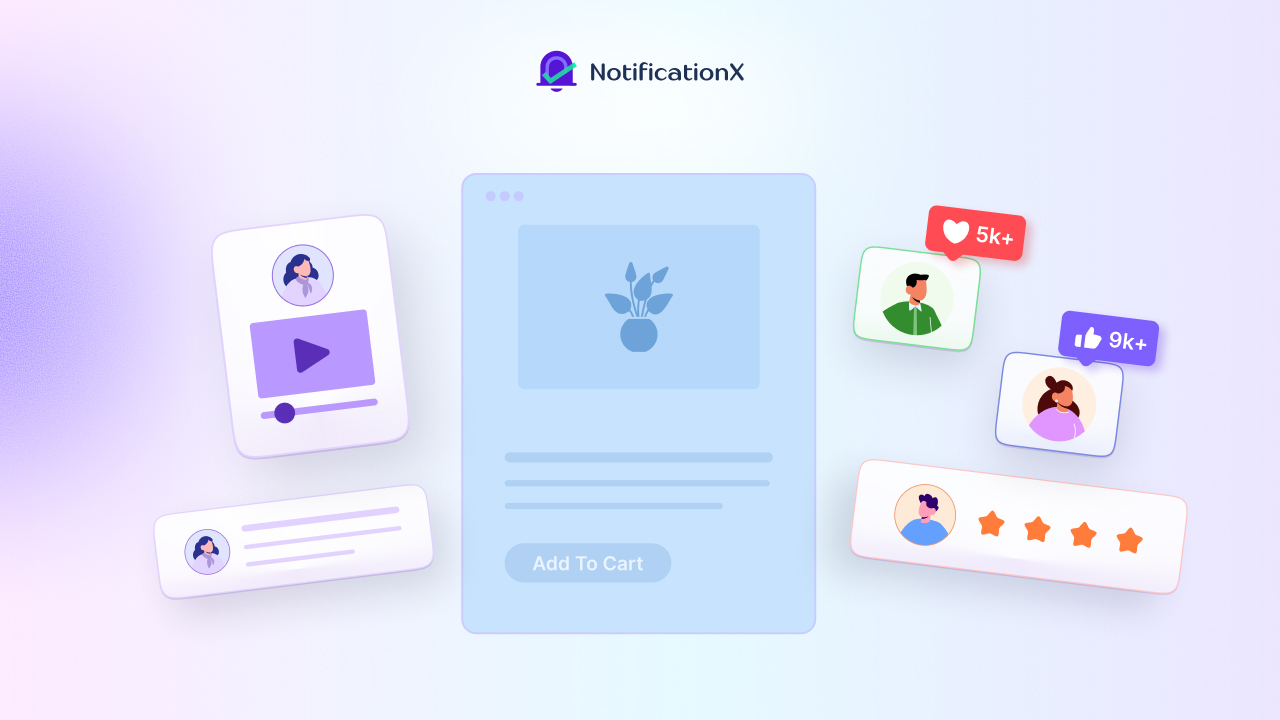
Display customer photos on product pages. Embed social media posts from satisfied customers. Share video testimonials. Each piece of UGC is a visible member of the crowd, giving other visitors a reason to follow.
When the Bandwagon Effect Can Backfire
Các bandwagon effect is a powerful tool. It is also a trust tool. When it works, it builds confidence and reduces purchase hesitation. When it is misused, it destroys the trust it was supposed to build.
Here is where the line sits:
What Works and Maintains Trust
- Displaying real purchase notifications from actual customers
- Showing accurate review counts and star ratings you have genuinely earned
- Using real stock numbers when products are genuinely low in inventory
- Displaying accurate customer counts or active user numbers
- Sharing genuine UGC with customer permission
What Destroys Trust
- Fake countdown timers that reset every time the page loads
- Displaying ‘only 2 left in stock’ for a product that has unlimited inventory
- Showing fabricated or paid ‘reviews’ that are not genuine customer feedback
- Manufacturing false social proof numbers that do not reflect reality
The modern consumer is sophisticated. They have seen every manipulation tactic and they have gotten very good at detecting them. A fake countdown timer that resets is noticed. A review that sounds like marketing copy is ignored. A ‘someone just bought this’ notification that appears on a page with no actual sales is implausible.
The bandwagon effect works because it reflects reality. The moment you distort that reality, you lose both the effect and the trust. The ethical version is also the effective version: show what is actually happening, and let your genuine crowd do the persuading.
How NotificationX Puts Bandwagon Psychology to Work on Your Website
Understanding the bandwagon effect in marketing is one thing. Implementing it across your website without technical complexity is another. This is where NotificationX comes in.
NotificationX is an AI-powered social proof marketing solution that helps you turn your real website activity into live, visible signals of crowd behavior. It displays what is actually happening on your site, in real time, to visitors who have not yet made a decision.
Live Sales Notifications
Real-time sales notifications are NotificationX’s core feature. Every time a customer completes a purchase on your WooCommerce store, NotificationX automatically displays a notification to other visitors: ‘[Name] from [Location] just purchased [Product]’. This is the bandwagon effect in its purest digital form. A real person, a real purchase, is shown to visitors at the exact moment they decide whether to buy.
🔔 NotificationX pulls live purchase data directly from Thương mại điện tử and displays it as branded, mobile-responsive notification popups. No manual setup per notification. No fake data. Just your real sales activity, made visible to every visitor on your site.
Review Notifications
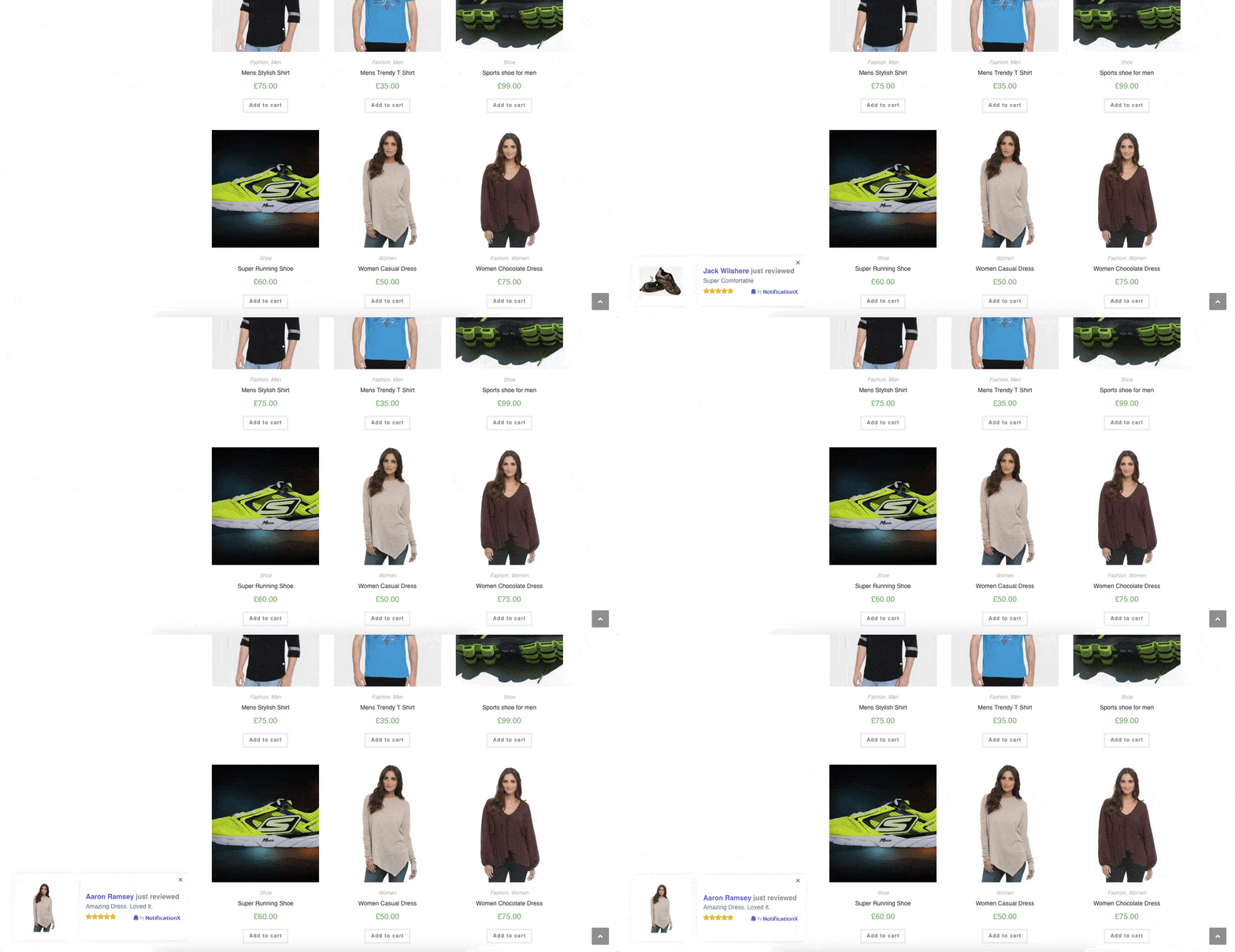
When customers leave positive reviews on your WordPress.org plugin page, Google, or other connected platforms, NotificationX can display those reviews as live notifications. A visitor sees: ‘★★★★★ James: This plugin changed how I work.’ That is tiếp thị bằng chứng xã hội và herd mentality marketing working together. The review is the crowd member speaking. The notification is the megaphone.
FOMO Notifications
NotificationX supports Tiếp thị FOMO notifications that show how many people are viewing a page, what is selling fast and what stock is running low. These notifications combine bandwagon effect signals (other people are looking at this) with fear of missing out marketing triggers (and if you do not act, you may not get it) to create a conversion environment that motivates without manipulating.
Announcement Bars And Custom Notifications
Beyond purchase and review notifications, NotificationX lets you create announcement bars, email subscription alerts, and custom notification types. All of these can be used to signal crowd behavior: how many people have subscribed, how many have downloaded, and how many have signed up — turning every metric into a visible bandwagon signal.
Analytics to Measure What Works
NotificationX includes a phân tích tích hợp dashboard showing total clicks, total views, and click-through rates for every notification. This means you can measure which bandwagon effects in marketing tactics are actually driving behavior on your site and optimize accordingly, rather than guessing.
Bandwagon Effect And Consumer Psychology: A Practical Checklist
Before you leave, here is a practical checklist for applying consumer psychology, marketing and the bandwagon effect to your website right now:
- Real-time sales notifications: Set up live purchase notifications on your product and checkout pages so every visitor can see who just bought
- Tiếp thị bằng chứng xã hội: Display your total customer count, active user numbers, or total downloads on your homepage and pricing page
- Review visibility: Place star ratings and review excerpts on every product page, above the fold if possible, not buried at the bottom
- Tiếp thị FOMO: Display genuine low-stock alerts and time-sensitive offers that reflect real inventory and real deadlines
- Herd mentality marketing: Audit your copy for bandwagon language — ‘join X users’, ‘trusted by Y companies’, ‘most popular plan.’
- Social validation in eCommerce: Add customer photos, UGC, and social media testimonials to product pages
- Analytics: Track which social proof elements are driving the most clicks and conversions — optimize based on data, not instinct
The Crowd Is The Ultimate Decision Factor
The bandwagon effect in marketing is not a gimmick. It is a fundamental feature of how human decision-making works. When people are uncertain, they look for evidence of what others have done. When they find that evidence clearly displayed, the uncertainty resolves and the decision becomes easier.
Your website already has the raw material. Real customers buying real products. Real reviews from real people. Real activity is happening on your pages right now. The gap between what is happening and what your visitors can see is where conversion opportunities are being lost every day.
Bandwagon effect in marketing done right is simply making the crowd visible. It is showing your hesitant visitors that other people have already been where they are and decided to move forward.
Tools like NotificationX automate that visibility. They take your real social activity and surface it at exactly the right moment, to exactly the right visitor, in exactly the format that resolves uncertainty and drives action.
The crowd is already moving. Make sure your visitors can see it.
Đăng ký blog của chúng tôi & join our Cộng đồng Facebook for more actionable insights on tiếp thị bằng chứng xã hội, consumer psychology marketing, and conversion optimization for WordPress and WooCommerce sites.
FAQs: Bandwagon Effect in Marketing
What is the bandwagon effect in marketing?
Bandwagon effect in marketing refers to using the psychological tendency of people to follow what others are doing as a conversion tool. By showing visitors evidence of crowd behavior — purchases, reviews, user counts, live activity — marketers reduce purchase hesitation and increase the likelihood of conversion.
Is the bandwagon effect ethical to use in marketing?
Yes, when it reflects reality. Displaying genuine purchase notifications, accurate review counts, and real customer numbers is both ethical and effective. The bandwagon effect becomes manipulative only when social proof is fabricated or exaggerated. Authentic tiếp thị bằng chứng xã hội builds trust; fake social proof destroys it.
What is the difference between the bandwagon effect and FOMO?
Các bandwagon effect says, ‘other people are already doing this.’ Tiếp thị FOMO says, ‘if you do not act, you will miss out.’ They are closely related but distinct. The bandwagon effect is primarily about social validation; FOMO is about loss aversion and urgency. Used together, they are highly effective.
What are some examples of the bandwagon effect on websites?
Bandwagon effect examples on websites include: real-time purchase notifications (‘Sarah just bought this’), review counts and star ratings, social proof numbers (‘Trusted by 50,000 customers’), ‘Best Seller’ labels, and UGC displays showing real customers using your product.
How does NotificationX use the bandwagon effect?
NotificationX automates the bandwagon effect in marketing for WordPress and WooCommerce sites by displaying live sales notifications, review alerts, email signup activity, and custom notifications that show visitors what other people are doing on your site in real time. It turns your genuine social activity into visible, conversion-driving social proof.
Does the bandwagon effect work for all types of websites?
Yes. While it is particularly powerful for eCommerce and SaaS sites, the bandwagon effect applies to any website where visitors need to make a decision. Blogs use it through social share counts and comment activity. Course platforms use it through enrollment numbers. Membership sites use it through active member counts. The underlying psychology is universal.




 English
  Arabic
  Indonesian
  Spanish
  Portuguese
  German
  Dutch
Dutch  Russian
  Hindi
Hindi  French
  Japanese
  Chinese
  Vietnamese
  Malay
Malay