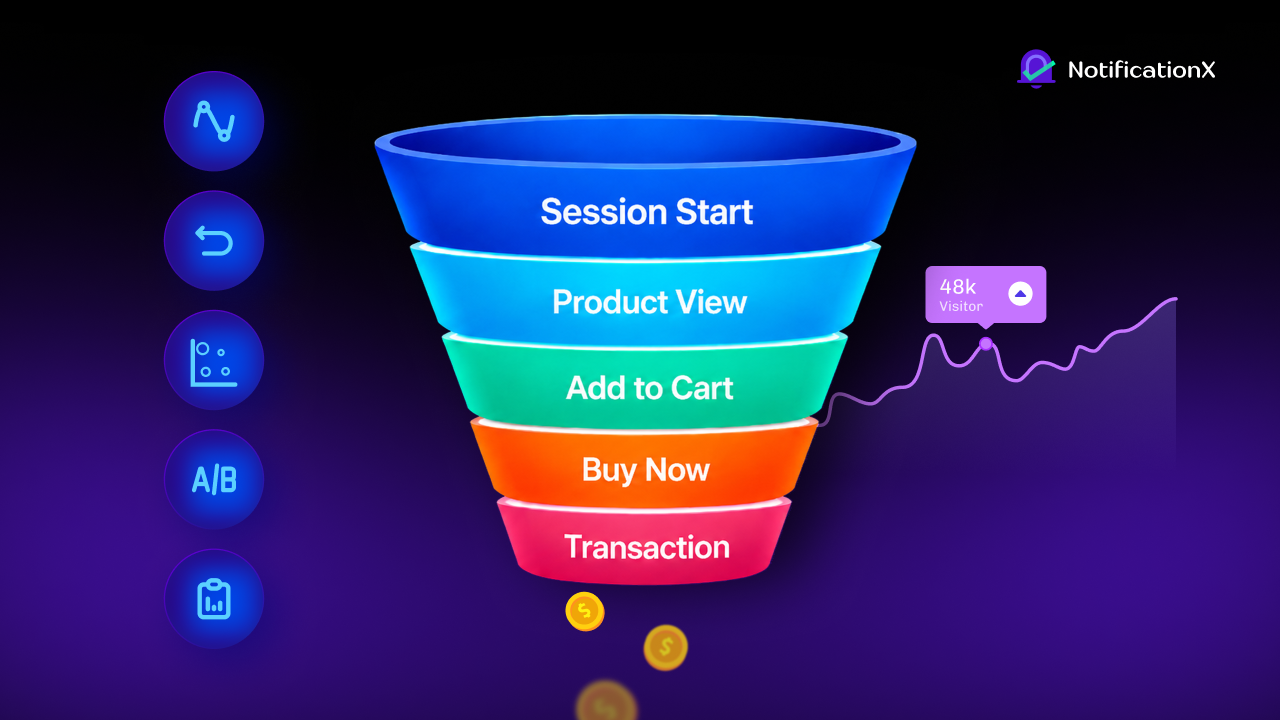
Do you know that even a small increase in your conversion rate can make a big difference? If your website earns $50,000 a month, improving conversions by just 1% could add $500 in monthly revenue without increasing your traffic.
That is why more businesses are investing in conversion optimization consulting. Whether you run an eCommerce store, SaaS business, or lead-generation website, the right CRO strategy can help turn more visitors into customers.
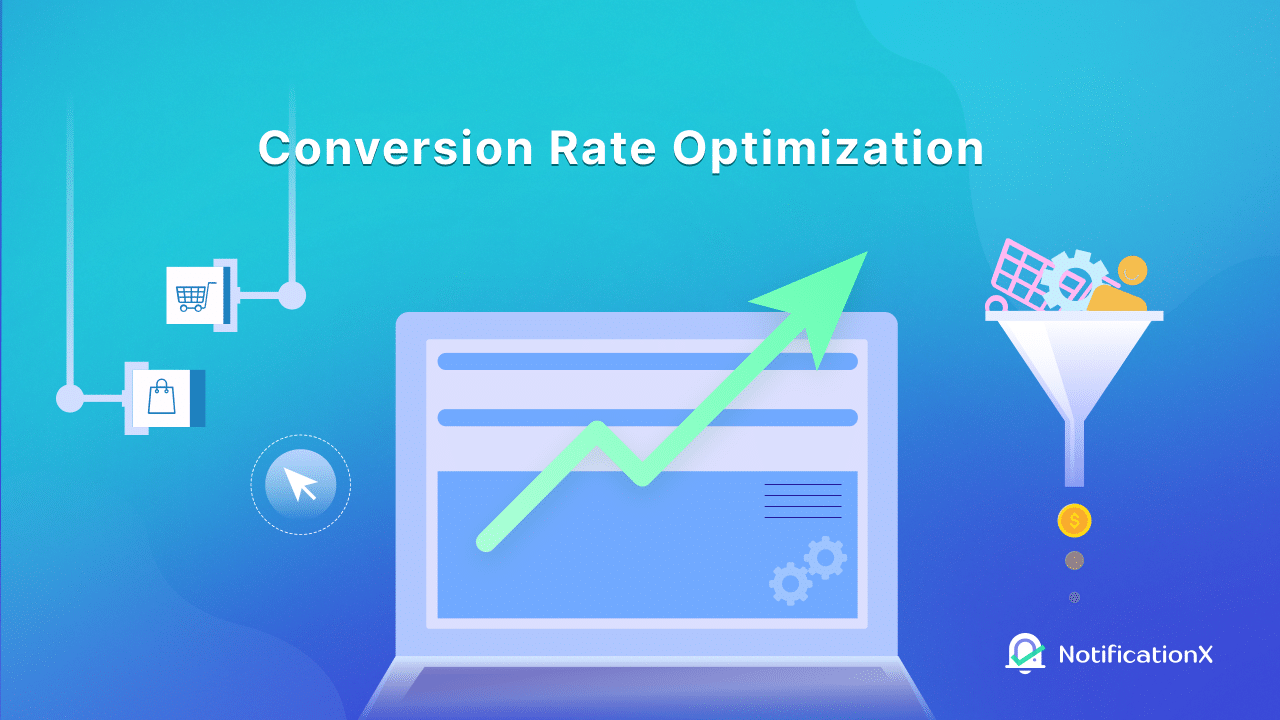
In this guide, you will learn when it is worth hiring a CRO consultant, how much conversion optimization consulting costs in 2026 and what improvements you can make on your own before investing in expert help.
Quick Summary / TL;DR
- Hourly rates for CRO consultants run $100 to $400. Top specialists charge $400 to $1,500 per hour.
- Monthly retainers typically fall between $2,000 and $30,000, with most mid-market engagements landing at $3,000 to $7,500.
- Hire a consultant when traffic is flat, paid acquisition costs are climbing, or your team has run out of testing ideas.
- Skip the consultant when the conversion win is in implementation rather than strategy, especially for social proof, FOMO, and trust signal layers.
What Is Conversion Optimization Consulting?
Conversion optimization consulting is a specialized service where an outside expert analyzes your funnel, identifies where visitors are dropping off and runs a structured testing program to improve conversion rates. The output is rarely a single redesign. It is a system of hypotheses, controlled experiments and validated improvements that compound over time.
How CRO Consulting Differs from General Marketing Services
Most marketing agencies focus on getting more traffic. CRO consulting focuses on what happens after the traffic arrives. A good consultant cares about the click that does not happen, the form that does not get submitted, the checkout that gets abandoned at step three.
| Criteria | General Marketing Services (SEO, Paid Media) | CRO Consulting |
| Primary focus | Driving more traffic to the site | Converting the traffic already arriving |
| Core question | “How do we get more people here?” | “Why aren’t people taking action once they’re here?” |
| Key skill set | Channel expertise, keyword/ad strategy, campaign management | Statistical literacy, behavioral psychology, UX judgment, A/B testing setup |
| Success metric | Traffic volume, rankings, impressions, clicks | Conversion rate, revenue per visitor, form completions |
| Typical output | Campaigns, content, ad spend allocation | Hypotheses, tested variations, statistically validated results |
| Failure point they catch | Underperforming channels or keywords | Drop-off points: abandoned forms, checkout exits, dead clicks |
That blend of statistical, psychological, UX, and technical skill is rare, which is why specialists command premium rates compared to general marketing services.
What Deliverables to Expect from a CRO Engagement
A typical engagement includes a baseline audit covering analytics setup, heuristic evaluation and conversion funnel analysis. From there, the consultant builds a prioritized hypothesis backlog, designs and runs A/B tests, validates results with statistical rigor and translates the findings into ongoing recommendations. Most engagements also include monthly reporting and strategic consultation hours.
The deliverables matter because they tell you whether you are paying for thinking or for execution. Both have value, but they justify different price tags.
7 Signs You Need a Conversion Optimization Consultant
Not every business needs a CRO specialist right now. Some are too early. Others have the right talent in-house under a different title.
De acordo com industry analysis of CRO consultant value, if two or more of these signs describe your situation, the investment is likely overdue.
1. Your traffic is up, but conversions are flat. This is the single most common trigger. You are spending on ads, publishing content and driving visitors, but the conversion rate refuses to move. A consultant separates traffic quality from page performance, which are different problems with different fixes.
2. Paid acquisition costs are climbing with declining ROAS. When customer acquisition cost rises faster than conversion rate, you are buying growth instead of earning it. CRO is the fastest way to flip that ratio without throwing more budget at ads.
3. Your team has run out of ideas. After your team exhausts the usual best practices (cleaner CTAs, faster pages, better forms), conversion gains plateau. This is where a consultant earns their fee, by bringing testing methodology and patternCon recognition from hundreds of prior projects.
4. Cart abandonment, form drop-off, or trial-to-paid conversion is above the industry average. Specific funnel leaks, like 70%+ cart abandonment or 30%+ form drop-off signal repairable problems with high-impact fixes available.
5. You have data but cannot interpret it. Many teams have Google Analytics, heatmaps, and session recordings, but no one has the statistical literacy to make confident decisions from the data. According to research on CRO consultant scope, this is exactly when internal capacity hits a ceiling.
6. Mobile conversion rates lag behind desktop by a wide margin. Mobile traffic is now the majority of visits for most sites, but mobile conversion rates often run 30 to 50% lower than desktop. A consultant can audit the mobile experience and isolate the friction.
7. You are about to launch a major redesign or new pricing tier. Big launches without a testing framework are expensive guesses. A consultant builds the experimentation infrastructure that turns the launch into a learning system.
How Much Does Conversion Optimization Consulting Cost in 2026?
Pricing for conversion optimization consulting is genuinely all over the map. A startup might get value from a $1,000 audit. A growing ecommerce brand typically spends $5,000 a month. An enterprise SaaS company may invest $30,000 or more monthly. The right number depends on traffic volume, business complexity, and which pricing model fits your situation. (Source: FunnelFreaks)
1. Hourly Rates Explained
Hourly engagements work best when the scope is well-defined and small. You might bring in an expert for a checkout audit, an analytics review, or a single landing page evaluation.
De acordo com a 2026 breakdown of CRO consultant rates, experienced consultants charge $100 to $300 per hour. Senior specialists with documented case studies command $250 to $400 per hour. Elite consultants who have worked with major brands sometimes charge $400 to $1,500 per hour for strategic consultation.
Cons of Hourly Rate Consultation:
The downside of hourly work is that it lacks the continuity good optimization needs. You get the audit, but execution and follow-through often suffer.
2. Monthly Retainer Ranges
Monthly retainers are the most common model for ongoing CRO work. Per 2026 industry pricing data, retainer ranges typically look like this:
| Retainer Tier | Monthly Cost | What You Get |
| Lower tier | $2,000 to $5,000 | 1-2 tests/month, strategic guidance, limited implementation |
| Mid-market | $5,000 to $10,000 | Higher test velocity, hands-on implementation, and regular consultation |
| Enterprise | $15,000 to $30,000+ | Dedicated team, sophisticated testing, deep marketing integration |
Retainers work best when you have consistent traffic and want continuous improvement. They are not a fit for early-stage sites that cannot generate enough test traffic to reach statistical significance.
3. Project-Based Pricing
Project pricing gives you cost certainty and works well for specific goals. CRO industry pricing data from 2025 shows audits start at $990 to $1,540 for a basic CRO audit. A landing page optimization project typically runs $2,000 to $8,000. A full checkout flow redesign and testing program can range from $5,000 to $25,000. Comprehensive optimization programs, including strategy, testing roadmaps, and ongoing optimization, run $10,000 to $50,000+.
CRO Consulting Pricing by Business Type
Pricing varies meaningfully based on what kind of business you run. The same consultant might charge a B2B SaaS company twice what they charge a local lead-gen site, because the funnel complexity and tooling are different.
1. eCommerce CRO
Ecommerce CRO services typically cost $2,000 to $5,000 per month for mid-market stores. Pricing scales with product catalog size, traffic volume and platform complexity. Advanced needs like personalization, dynamic pricing and checkout optimization push budgets higher. Per business-specific CRO cost research, regular A/B testing and product page optimization add the most ongoing value for ecommerce.
2. SaaS CRO
Directive Consulting is the strongest full-service agency for enterprise SaaS ($15K-$50K/month) with $1B+ in attributed client revenue. The wide range reflects how much complexity a subscription business carries. Free-trial flows, onboarding, activation events, paywall design, and pricing-page experimentation all require sustained testing programs. Enterprise SaaS companies often allocate the high end because their funnels have many testable stages.
3. Lead Generation CRO
For lead generation businesses, CRO work usually centers on three areas: form submission flows, ad landing pages, and call-to-action testing.
Because of that focus, pricing depends heavily on scope. The number of landing pages, how complex the lead capture forms are, and how deeply everything integrates with the CRM all factor in. Based on that scope, lead-gen CRO pricing typically ranges from $1,500 to $9,000 per month.
Rule of thumb for budgeting: once a CRO program matures, common allocation guidance suggests it should claim around 30% of a business’s total marketing budget.
When NOT to Hire a CRO Consultant
Hiring a CRO consultant is a serious commitment. It is not always the right move, even when conversions feel low.
1. When You Are Below the Traffic Threshold
A/B testing requires a sample size to reach statistical significance. Sites with lower monthly visitors usually cannot run enough tests to deliver meaningful results within a useful timeframe. If your traffic is low, your money is better spent on traffic acquisition first, then conversion optimization once you have scale to test against.
2. When the Win Is in Implementation, Not Strategy
Many real conversion gains come from straightforward implementation rather than from deep strategic analysis. Adding a sticky cart bar, surfacing social proof, displaying real-time activity, optimizing trust badges, or installing exit-intent offers are tactics that have well-documented results.
This is where dedicated WordPress tools fill the gap that consultants cannot fill cost-effectively. Social proof and FOMO marketing features like real-time purchase notifications, recent activity alerts, and live visitor counts deliver 10% to 15% conversion lifts on average across ecommerce stores.
3. When You Can Self-Serve the Social Proof Layer
If your CRO bottleneck is missing trust signals, missing urgency, or missing recency cues, you can capture those gains without consulting. NotificationX integrates with WooCommerce, SureCart, and other ecommerce integrations to turn every customer action into a trust signal for the next visitor. That kind of implementation work does not need a consultant. It needs a Saturday morning and a plugin install.
The honest framing is this. Hire a CRO consultant when you need methodology, statistical rigor, and a structured testing program across complex funnels. Skip the consultant when the gain is operational and the tooling already exists.
How to Hire the Right Conversion Optimization Consultant
If the signs apply to your business and you have decided to invest, the next step is choosing the right partner. The category has a lot of strong specialists and a lot of weak ones, and the price tag rarely tells you which is which. Here’s how to approach the hiring process in four steps.
1. Clarify Your Goals and Budget First
Before reaching out to anyone, get clear on what you are actually trying to solve. Is it cart abandonment, weak lead capture, low trial-to-paid conversion, or something else? Knowing this shapes which consultants are even a fit, since many specialize by business model (ecommerce, SaaS, lead gen) rather than working generically.
Set a realistic budget range based on the pricing benchmarks covered earlier in this guide. Walking into conversations with a number in mind keeps you from overpaying for scope you don’t need, or underpaying for a program that can’t move the needle.
2. Vet Their Track Record and Process
Ask for specific case studies with numbers. Vague claims about “significant improvements” without metrics are a red flag. A strong consultant should be able to walk you through a past test, including the hypothesis, the result, and the statistical confidence behind it.
Ask how they calculate sample size and statistical significance. If they cannot answer clearly, they lack the rigor that makes CRO actually work. Also, ask about their prioritization framework. Strong consultants use scoring models that weigh potential impact, confidence, and effort, rather than testing whatever seems interesting.
3. Ask the Right Questions Before Signing
Beyond track record, ask which tools they use. In 2026, expect proficiency in GA4, heatmap software, A/B testing platforms, and reporting dashboards at a minimum. Ask how often they will report results, what a typical testing cadence looks like, and who on their team will actually be working on your account.
Also clarify what happens if a test does not produce a clear result. How they handle inconclusive data says a lot about whether they’re methodical or just running tests for the sake of activity.
4. Watch for Red Flags
Guarantees that promise specific conversion lifts are usually a sign of a weak consultant. Too many variables affect outcomes for any honest consultant to guarantee a specific number. Aggressive sales tactics, scarcity messaging, or pressure to sign before reviewing the proposal carefully all signal a transactional relationship rather than a partnership.
Watch for consultants who promise “unlimited tests.” This usually means they will run as many tests as your traffic supports, not that they will dedicate unlimited resources to your account. It is a volume claim dressed up as a value claim.
If the signs apply to your business and you have decided to invest, the next step is choosing the right partner. The category has a lot of strong specialists and a lot of weak ones, and the price tag rarely tells you which is which.
Find the Right Conversion Optimization Consulting Option
Conversion optimization consulting is a strong investment when the signs match your situation. Flat conversions on rising traffic, climbing acquisition costs, exhausted in-house ideas, complex funnels with measurable drop-offs, all justify the spend at $2,000 to $30,000 a month.
For the social proof, urgency and trust signal layer specifically, the better path is often a dedicated tool that captures those wins without a consultant in the loop. NotificationX gives growing brands a way to add real-time activity alerts, sales notifications, and FOMO marketing to any WordPress site in minutes, with documented conversion lifts of 10% to 15% on average.
Before signing a consulting contract, audit which gains are strategic and which are simply unimplemented. The strategic work earns the consulting fee. The implementation work earns its keep through NotificationX pricing that costs less than a single hour of consulting.
Do not forget to inscreva-se no nosso blog, then join our Comunidade do Facebook today if you need any tips and tricks to uplift your marketing strategies.


 English
  Arabic
  Indonesian
  Spanish
  Portuguese
  German
  Dutch
Dutch  Russian
  Hindi
Hindi  French
  Japanese
  Chinese
  Vietnamese
  Malay
Malay