
Most marketing decisions are still based on assumptions. And that is exactly why campaigns fail. A/B testing in marketing is one of the smartest ways to improve campaigns without relying on guesswork. Instead of assuming which headline, CTA, email subject line, or landing page layout will perform better, marketers can test two variations and let real user behavior decide the winner. That is exactly why A/B testing remains a core practice for brands that want stronger conversions, better engagement, and more efficient spending.
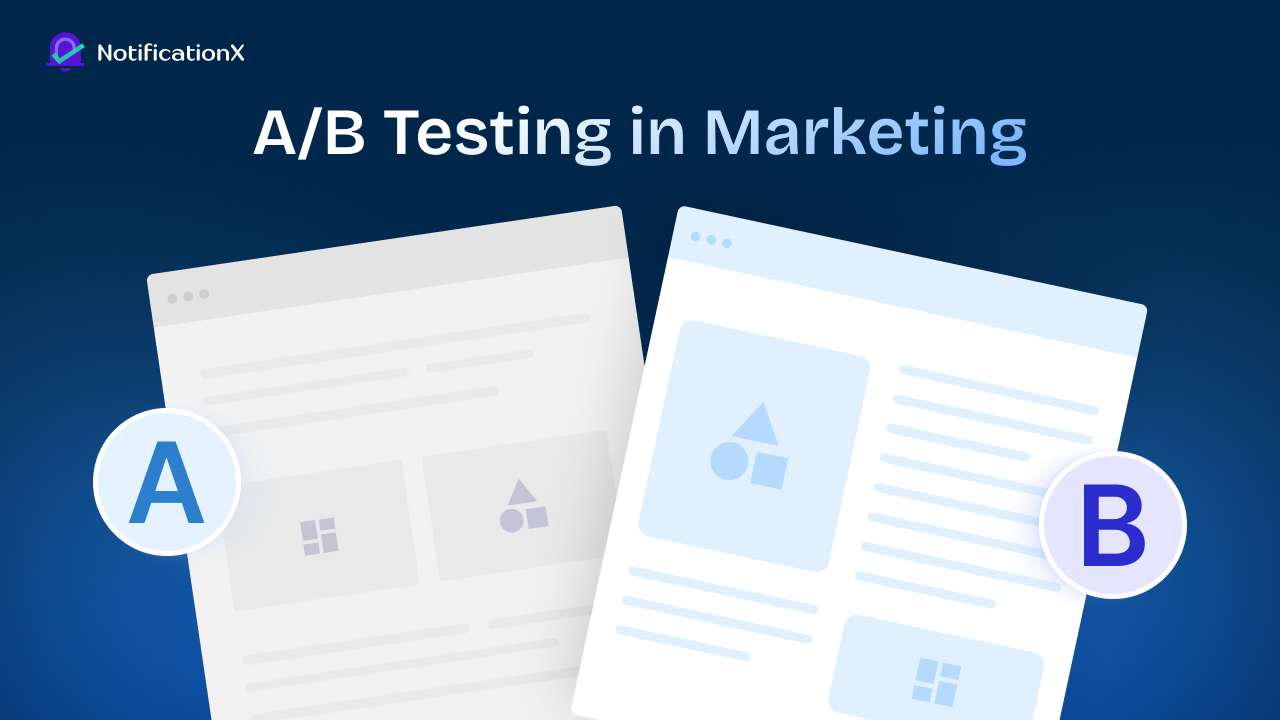
If you want better results from your website, ads, emails, or product pages, it provides a practical framework for optimizing every touchpoint. In simple terms, it helps you understand what your audience actually responds to. And when done consistently, it turns small improvements into major gains over time.
TL;DR
Too long? Didn’t read? Here is a quick summary of what’s inside the blog.
| What you want to achieve | Why A/B Testing in Marketing Matters? |
| Make smarter marketing decisions | A/B Testing in Marketing replaces assumptions with real performance data, so you know exactly what works before scaling it. |
| Increase conversions without chasing more traffic | Sometimes the fastest path to growth is not more visitors, but better-performing pages, emails, and ads. |
| Get more value from every marketing dollar | By improving the performance of existing campaigns, A/B testing helps you increase ROI without automatically increasing spend. |
| Understand what truly influences buyer behavior | Testing reveals which headlines, offers, visuals, and CTAs actually move people to click, sign up, or buy. |
| Reduce the risk of costly campaign mistakes | Instead of launching major changes blindly, you can validate ideas first and roll out only what proves effective. |
| Improve performance across multiple channels | From landing pages and paid ads to email campaigns and product pages, A/B testing helps optimize the full customer journey. |
| Identify high-impact elements to optimize first | Start with the areas most likely to influence results: headlines, CTA buttons, forms, layouts, pricing messages, and offers. |
| Avoid misleading or wasted test results | Strong A/B testing depends on proper setup, enough data, one clear variable, and a well-defined success metric. |
| Build a repeatable system for continuous growth | Every test generates insights that strengthen future campaigns, making your marketing smarter over time. |
| Turn small improvements into meaningful business results | Even a modest lift in conversion rate can create a major impact when applied consistently across high-traffic campaigns. |
What Is A/B Testing in Marketing?
A/B testing in marketing is the process of comparing two versions of a marketing asset to identify which one performs better against a specific goal. Version A is the control, Version B is the variation and traffic is split between them so marketers can measure outcomes such as clicks, signups, purchases, or engagement. This is a scientific method for changing one or more content factors in digital communication and then analyzing the outcomes to make a better decision.
In practice, A/B testing can be used on emails, landing pages, ads, forms, navigation, images, headlines and calls to action. Marketers often test elements like titles, CTA copy, page layout, forms, subject lines and images to improve conversion performance. A simple example would be testing “Start Your Free Trial” against “Get Started Free” on a landing page to see which CTA drives more signups. This also explains the purpose of a/b testing in digital marketing: to make measurable improvements based on data instead of opinion.
10 Reasons Marketers Should Run A/B Testing
A/B testing works as a game-changer for many businesses. It helps to create better decisions, understanding the audience in a better way and these lead to increased conversions. Here are some of the key reasons explained why every marketer should run A/B testing campaigns.
1. Removes Guesswork from Decisions
Marketing teams often debate which idea is “better,” but opinions do not always match customer behavior. This solves that problem by giving you evidence. Rather than arguing over button color, email copy, or page design, you can run a controlled experiment and let the numbers decide. That means your next move is based on what users actually do, not what stakeholders assume they will do.
For example, a SaaS company may believe a long-form landing page explains the product better, while the growth team prefers a shorter page. Instead of choosing one based on preference, they can test both and pick the version that produces more demos or trials.
2. Improves Conversion Rates Steadily
One of the clearest benefits of A/B testing is conversion optimization. Even small changes can have a meaningful effect on signups, sales, bookings, or leads. A stronger headline, clearer CTA, shorter form, or better image can remove friction and help more users take action. Over time, a series of small wins can create a major lift in overall performance.
Imagine an eCommerce brand testing a checkout page with a shorter form against the original version. If the shorter form reduces drop-off and increases completed purchases, that single test can directly impact revenue without increasing traffic.
3. Increases Budget Efficiency
More traffic does not always mean more growth. Often, the smarter move is improving the performance of the traffic you already have. A/B Testing helps marketers get more value from paid ads, email lists and organic traffic by optimizing existing assets before spending more money to scale them.

For instance, if a paid social campaign is sending thousands of visitors to a landing page, a test on the page headline or CTA could improve lead conversion from 4% to 5%. That gain may sound small, but it lowers acquisition costs and increases return without raising ad spend.
4. Reveals Audience Preferences
Marketers frequently think they know what customers want, but user behavior can be surprising. A/B tests uncover which messaging, design, tone and offers resonate most with your audience. That insight can shape not only one campaign, but also your broader brand strategy, product positioning and content planning.
A good example would be testing benefit-led copy against feature-led copy on a product page. If users respond better to “Save 10 Hours a Week” than “Advanced Workflow Automation,” you learn something valuable about how your audience thinks and buys.
5. Reduces Risk Before Rolling Out Changes
Large redesigns, new campaign angles and pricing page updates can be risky. If you launch them without validation, performance can drop fast. A/B Testing in marketing lowers that risk by allowing you to test a new version on a portion of traffic before making a full rollout. This is a key benefit because it limits exposure to weaker experiences while helping teams learn faster.
Say a company wants to redesign its homepage. Instead of replacing the entire page at once, it can test the new version against the existing one. If the redesign underperforms, the company avoids a costly mistake and learns what needs improvement first.
6. Improves Email Marketing Performance
Email remains one of the best channels for direct response marketing and it is also one of the easiest places to run structured tests. Subject lines, sender names, images, offer framing, CTA text and email length can all influence open rates and click performance.

For example, a brand might test a personalized subject line against a curiosity-driven one. If “Sarah, your spring offer is inside” beats “A limited-time offer you don’t want to miss,” that insight can guide future campaigns and improve list performance over time.
7. Sharpens Your Messaging And Positioning
Sometimes the biggest lift does not come from design at all. It comes from words. A/B tests can tell you whether your audience responds better to urgency, clarity, emotion, bukti sosial, simplicity, or value-focused copy. This is especially useful when launching new products, offers, or campaign themes.
A B2B software brand, for example, may test “Book a Demo” against “See How Teams Save 12 Hours Weekly.” If the second option wins, it suggests the audience is more motivated by the concrete outcome than by the generic next step. That kind of learning improves future ads, sales pages, and nurture emails.
8. Supports Better SEO And On-Site Engagement
While A/B Testing is not an SEO shortcut on its own, it can improve user behavior metrics that matter. Stronger engagement and increased time on site can support better organic performance over time by making pages more useful and compelling for visitors.
A practical example is testing a blog landing page with a clearer content hierarchy and stronger internal CTA blocks. If visitors stay longer, click deeper and engage more with content, the page becomes more effective for both users and search performance.
9. Creates a Culture of Continuous Improvement
The best marketing teams do not treat testing as a one-off tactic. They build it into their workflow. A/B testing encourages teams to develop hypotheses, measure outcomes, document learnings and improve continuously. That mindset leads to smarter campaigns and better collaboration between creative, growth, product and analytics teams.
For example, a team that tests one landing page per month will build a strong knowledge base over a year. They will know which CTAs, layouts, proof points and offers work best, making every future campaign stronger from the start.
10. Drive Outsized Business Results
One of the most important reasons to run A/B testing is simple: small changes can produce huge outcomes. A headline tweak, a cleaner layout, a better image, or a revised CTA can scale into thousands of extra leads or millions in added revenue when applied across large audiences.
That is why marketers should never dismiss testing as “minor optimization.” If a landing page gets 100,000 visits a month, even a modest increase in conversion rate can turn into a significant revenue gain. The compounding effect is what makes it such a powerful long-term strategy.
Examples of A/B Testing Across Different Industries
Since the reasons are clear, now it is time to understand A/B testing examples in marketing more practically. This will help to look at how different industries can apply it in their day-to-day campaigns. The core idea stays the same across every sector: create two versions of a marketing asset, measure performance and keep the version that drives better results.
eCommerce Industry
An eCommerce brand can use it to improve product page conversions, cart completion and promotional campaign performance. For example, an online clothing store might test two product page versions for their strategi pemasaran FOMO: one with a bold “Buy Now” button and another with a softer “Add to Cart” button. It can also test discount-based messaging like “Get 20% Off Today” versus urgency-based messaging like “Limited Stock Available.”

Another strong eCommerce test is product imagery. A brand can compare lifestyle images against plain product-only images to see which version drives more purchases. Even small tests on shipping banners, return policies, or checkout page copy can increase conversions over time.
SaaS Industry
For SaaS companies, the purpose of A/B testing in digital marketing is often to improve free trial signups, demo bookings and feature adoption. A SaaS business can test homepage headlines such as “All-in-One Project Management Software” versus “Manage Projects Without the Chaos” to see which message connects better with visitors.
They can also test pricing pages by comparing monthly pricing visibility versus annual savings messaging. Another common example is testing CTA buttons like “Start Free Trial” versus “Book a Demo.” These tests help SaaS marketers learn whether their audience prefers self-serve onboarding or a sales-assisted journey.
Healthcare Industry
Healthcare providers and clinics can run A/B testing to improve appointment bookings, consultation requests, and patient engagement. For instance, a clinic may test two landing pages for a dental service: one emphasizing affordability and the other highlighting patient comfort and trust.
Email campaigns can also be tested. A hospital or wellness brand might compare “Book Your Health Checkup Today” dengan “Prevent Problems Before They Start” to see which subject line drives more openings and bookings. In healthcare, trust-based messaging, reviews, certifications and doctor imagery are often useful variables to test.
Real Estate Industry
Real estate companies can use A/B testing to generate more inquiries for listings, property tours and lead forms. A realtor may test whether a property ad performs better with “Schedule a Viewing” atau “See Inside This Home” as the CTA. They can also compare short lead forms against detailed qualification forms to find the right balance between lead quality and lead volume.
Listing pages are another strong area for testing. One version may lead with pricing and location, while another highlights lifestyle benefits like schools, transport, and neighborhood appeal. This helps real estate marketers identify what motivates buyers or renters the most.
Education Industry
Schools, universities and online course providers can use A/B testing to improve enrollment, brochure downloads and webinar registrations. For example, an edtech company may test two course landing page headlines: one focused on career outcomes and another focused on skill development.
They can also test CTA language like “Enroll Now,” “Download Syllabus,” atau “Start Learning Today.” In email campaigns, they may compare subject lines that emphasize certification, salary growth, or limited seats. This is a great example of what is a/b testing in marketing in action, because it helps education brands understand what truly drives students to take the next step.
Travel And Hospitality Industry
Hotels, travel agencies, and tour operators can run A/B testing to improve booking rates and package inquiries. A hotel website might test whether users respond better to “Book Your Stay” atau “Check Availability.” It can also compare hero images showing hotel rooms versus destination experiences like beaches, dining, or spa facilities.
Travel businesses can also test the offer presentation. For example, “Free Breakfast Included” may outperform “Save 15% on Your Stay” depending on the audience. These tests help marketers learn whether price, convenience, or experience is the stronger buying trigger.
Financial Services Industry
Banks, insurance companies and fintech brands can use A/B testing to increase signups, quote requests and loan applications. A fintech app may test whether users convert better with messaging focused on speed, such as “Open an Account in 3 Minutes,” versus trust-focused copy like “Secure Digital Banking You Can Rely On.”
Insurance brands can test landing page forms, CTA buttons and headline framing. For example, “Get Your Free Quote” may perform differently than “See How Much You Can Save.” In this industry, trust badges, compliance messaging, testimonials, and calculator tools are often valuable testing elements.
B2B Services Industry
Agencies, consultants, and service providers can use A/B testing to improve lead generation and consultation bookings. A B2B company may test a homepage CTA like “Book a Strategy Call” against “Get a Custom Proposal.” It can also compare a short landing page against a long-form page with case-study-style proof and detailed service explanations.
Another good test is social proof placement. One version may place client logos above the fold, while another highlights testimonials near the CTA. These tests help service businesses understand what builds confidence faster for decision-makers.
Food And Restaurant Industry
Restaurants, food delivery apps, and packaged food brands can use A/B testing to improve online orders, app installs, and promotional redemptions. A restaurant might test “Order Now” against “Get Dinner Delivered” to see which CTA feels more compelling. It can also compare discount-driven offers like “20% Off First Order” with bundle-driven promotions like “Free Dessert with Combo Meal.”
Food brands can also test visuals heavily. For example, close-up product shots may perform differently from family dining or lifestyle imagery. In this industry, appetite appeal, urgency and convenience are usually strong variables to experiment with.
Nonprofit And Community Organizations
Even without referencing political campaigns, nonprofits can use A/B testing to improve donations, volunteer signups and event registrations. A nonprofit may test emotional storytelling against impact-driven statistics on its donation page. One version might say “Help a Child Today,” while another says “Your $25 Provides School Supplies for One Student.”
Email testing is also useful here. Subject lines focused on urgency may perform differently from those focused on hope or outcomes. This helps nonprofit marketers discover what messaging moves supporters to act.
Biggest Mistakes to Avoid in A/B Testing
Even though A/B testing is one of the most effective ways to improve campaign performance, many marketers still get misleading or unusable results because of avoidable mistakes. A successful test is not just about creating two versions and waiting for a winner. It requires the right structure, a clear goal, and enough patience to draw the right conclusion.
Below are five of the biggest mistakes marketers should avoid if they want their A/B testing efforts to produce reliable and profitable insights.
Testing Too Many Variables
One of the most common mistakes is changing too many things in a single test. If you change the headline, CTA button, image and page layout all at once, you may see a difference in performance, but you will not know which change actually caused it. That makes the result much less useful for future optimization.
For example, if a landing page suddenly performs better after multiple changes, was it because of the stronger headline, the new testimonial section, or the button color? Since you changed everything together, you cannot isolate the winning factor. In most cases, it is smarter to test one major variable at a time unless you are running a more advanced multivariate test.
How to Fix It:
Test one major variable at a time whenever possible. This makes the outcome clearer and helps you apply the learning to future campaigns with confidence.
Ending the Test Too Early
Another major mistake is stopping the test before enough data is collected. Many marketers see one variation performing better after a day or two and immediately declare it the winner. But early results can be misleading, especially if traffic volume is low or audience behavior changes across different days of the week.
For instance, imagine an eCommerce brand testing two email subject lines. After a few hours, one subject line appears to have a much higher open rate, so the team chooses it as the winner. But if they had waited longer, they may have found that the other version performed better once more recipients opened emails later in the day. Ending a test too soon can cause brands to make decisions based on incomplete data.
How to Fix It:
Let the test run long enough to collect a meaningful sample size. Do not rush to a conclusion based on early numbers alone.
Testing Without a Clear Goal
A/B tests should always have one primary objective. Without a clear goal, marketers can easily get confused by mixed results. One version may get more clicks, while the other generates more purchases. If you do not define success in advance, it becomes difficult to know which version truly won.
For example, a SaaS company testing a landing page might notice that Version A gets more button clicks, but Version B produces more demo bookings. If the real business goal is demo bookings, then Version B is the better performer, even if it has fewer clicks. This is why every test should be tied to one main metric, such as conversions, form submissions, purchases, or click-through rate.
How to Fix It:
Choose one primary KPI before launching the test, such as click-through rate, form submissions, purchases, or demo bookings. Judge the result based on that metric first.
Ignoring Audience Segmentation
Not every audience behaves the same way and this is where many marketers go wrong. A test result may look average overall but reveal very different behaviors across mobile users, desktop users, new visitors, or returning customers. If you only look at the total result, you may miss valuable insights hidden inside audience segments.
For example, a travel company might test two booking page designs and find only a small difference overall. But a closer look may show that mobile users strongly prefer the simpler version, while desktop users perform about the same on both. If the company ignores segmentation, it may overlook a major mobile conversion opportunity. Good A/B testing is not just about finding a winner, but also about understanding who responded to it.
How to Fix It:
Review test results by segment wherever possible. Break down performance by device, audience type, traffic source, or geography to uncover more useful patterns.
Running a Test without Learning
One of the biggest wasted opportunities in A/B testing is treating each test as a one-time task instead of part of a long-term optimization process. Some marketers run a test, choose the winner and move on without documenting why the variation may have worked or how the insight can be used in future campaigns.
For instance, if a B2B agency finds that “Get a Free Strategy Call” performs better than “Contact Us,” the lesson is not just about one button. It may reveal that their audience responds better to value-driven offers than generic CTAs. That insight can be applied to ads, email campaigns, landing pages, and sales copy. The best marketers do not just collect winners, they collect learnings.
How to Fix It:
Record the hypothesis, result, and takeaway after every test. Build a simple testing log so each experiment contributes to smarter future decisions.
Start Testing Before Your Competitors Do
The biggest mistake in digital marketing is not running a failed test. It is never tested at all. A/B testing in marketing helps you uncover what truly works, improve conversion rates, reduce wasted spend and build campaigns that are rooted in customer behavior rather than assumptions. Whether you are optimizing emails, landing pages, ads, or product pages, testing gives you a repeatable system for making smarter decisions.
If you want better results, start small and stay consistent. Pick one high-impact page or campaign, test one variable, measure the outcome and use that insight to guide the next experiment. That is how A/B testing turns incremental wins into meaningful growth.
Was this blog helpful? Do not forget to berlangganan blog kami. If you want to discuss more marketing talk, then join our Komunitas Facebook today.





 English
  Arabic
  Indonesian
  Spanish
  Bengali
  Portuguese
  German
  Dutch
Dutch  Russian
  Hindi
Hindi  French
  Japanese
  Chinese
  Vietnamese
  Malay
Malay